Hello, pet parents! Welcome to my ultimate guide on feeding Cavalier King Charles Spaniels.
Cavalier King Charles Spaniels are one of the most popular lap dogs in the world, and they are loved for their gentle, playful nature. I will go into details from my personal knowledge working for a vet on every feeding question you might have.
Cavalier King Charles Spaniels are active, playful dogs that possess boundless energy; they are known to chase anything moving, like vehicles (this trait can be curbed with training). They are extremely cute and engage in sporting activities. These traits have endeared them to pet parents around the world. You have to feed them the best possible nutrition to maintain their energy and vibrancy.
- Cavalier King Charles Spaniel Nutritional Requirements
- Factors Affecting the Feeding of A Cavalier King Charles Spaniel
- Cavalier King Charles Spaniel Feeding Amount
- Cavalier King Charles Spaniel Feeding Frequency
- Cavalier King Charles Spaniel Feeding Schedule
- Food To Feed Your Cavalier King Charles Spaniel
- Food To Avoid Feeding Your Cavalier King Charles Spaniel
- When To Transition A Cavalier King Charles Spaniel from Puppy Food To Adult Food
- Why Your Cavalier King Charles Spaniel is Not Eating
- Why Your Cavalier King Charles Spaniel Is Always Hungry
- Frequently Asked Questions on Feeding A Cavalier King Charles Spaniel
- Final Thoughts on Cavalier King Charles Spaniel Feeding Guide
This guide has been specifically created to help you with your Cavalier King Charles Spaniel feeding problem. The range of nutrients, measurement of the quantity of feed, and type of feed will be covered by this article; just ensure you read it carefully and thoroughly.
I have created this ultimate guide to feeding your Cavalier King Charles Spaniel for curious and new pet parents to solve your dog’s nutrition problem.
Let’s jump into the article.
Cavalier King Charles Spaniel Nutritional Requirements

Cavalier King Charles Spaniels are small dogs that require the right nutrients in specific amounts to grow healthy. Like other dog breeds, if some of these nutrients are present in excess amounts or less, it would end up endangering the overall health of your dog.
Your Cavalier King Charles Spaniel’s meals when they are in their growing phase should primarily consist of 22% protein; adults, 18% protein; 8% fat as puppies, and as adults, 5% fat; fiber, carbohydrates, multi-vitamins, and minerals.
Your Cavalier King Charles Spaniel’s feed should contain an adequate amount of vitamins for a healthy immune system and minerals for healthy, strong bones. While its source of fiber should come from wholesome vegetables like broccoli, carrots, cabbage, and sprouts, its source of protein must come from animal flesh like fish, chicken, turkey, beef, and organ meat. Its source of fat must come from vegetables and fish oil.
Nutritional Requirement for a Cavalier King Charles Spaniel Puppy
The diet of a Cavalier King Charles Spaniel puppy and adolescent should consist of 22% protein, 8% fat, and 6% fiber. Puppies have a faster metabolism and would need as many nutrients to grow muscles and strong bones; this is the growing phase of your dog, and they will be fed more often than in other stages.
Nutritional Requirement for an Adult Cavalier King Charles Spaniel
The meal plan for a mature and adult Cavalier King Charles Spaniel should consist of 18% protein, carbohydrates, 5% fat, and fiber. At this stage, Cavalier King Charles Spaniels are most active and will need protein and carbohydrates to keep their weight and energy level optimal. However, you should avoid overfeeding your pet at this stage, as Cavalier King Charles Spaniels are prone to obesity and will develop health complications.
Nutritional Requirement For Senior Cavalier King Charles Spaniel
At this stage of your dog’s life, it is less active than at other stages. Your pet’s food at this stage of life should ideally consist of 30% protein, 5% fat, and fiber. Senior Cavalier King Charles Spaniels will need minerals and vitamins added to their food to keep their immune system and bones healthy.
Factors Affecting the Feeding of A Cavalier King Charles Spaniel
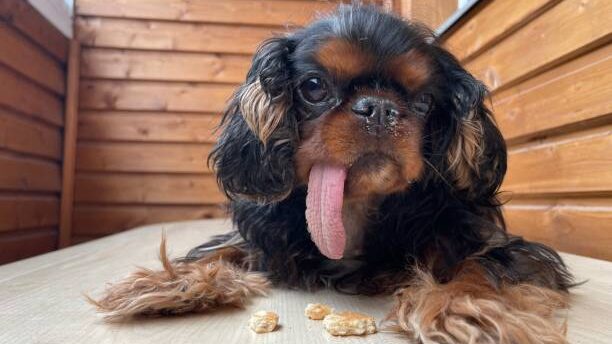
Some factors will affect the diet of your Cavalier King Charles Spaniel, such as the size of the breed, its age, its activity level, and its underlying health conditions.
Let’s take a quick look at those factors before we jump into the quantity of food to feed your dog.
Size consideration
The average length of a Cavalier King Charles Spaniel for males and females is 30–33 cm from the sole of its feet to its shoulder. The weight of a Cavalier King Charles Spaniel is 5.9 to 8.2 kg.
Both males and females are the same size, so both will require the same number of calories to grow optimally.
Age consideration
A Cavalier King Charles Spaniel puppy is in the growth stage, and as such, their feed is usually packed with nutrients for growth and energy. The adult stage is the active stage; nutrients are for the maintenance of body weight and energy generation. As seniors, your pup is less active and will require fewer calories than at the adult stage, or else they might become overweight and develop serious health problems.
Activity Level
Cavalier King Charles Spaniels are very active and agile dogs, with sturdy and muscular frames. To maintain this physical status, they must be fed a strict and high-quality diet. Your Cavalier King Charles Spaniel puppy should not be fed adult food because adult dogs are more active and will require more energy-giving food. Seniors are less active and so will require minimal calories.
Health Consideration
Cavalier King Charles Spaniels are prone to certain health conditions, which should be taken into consideration when choosing their diet if you wish to manage those issues.
Some health issues that affect Cavalier King Charles Spaniels include hip dysplasia, mitral valve disease, retinal dysplasia, luxating patella, cataracts, and hearing disorders.
Some of these health issues can be prevented or controlled by feeding your dog the right food and following strict guidelines when feeding them.
If Cavalier King Charles Spaniels are fed low-quality feed that is most of the time the cheapest, it might trigger some of these issues in your pet and may cause you to spend a hefty sum when you visit the vet. To prevent this, proper steps need to be taken.
Cavalier King Charles Spaniel Feeding Amount

Your Cavalier King Charles Spaniel, just like any other dog breed, will require different amounts of food according to its stage of development. The amount of food a puppy will need will be different than the amount of food an adult will need according to their nutritional requirements.
On average, feed your puppy Cavalier King Charles Spaniel 0.25 to 0.90 cups of food that has 117 to 264 kcal per day; feed your adult Cavalier King Charles Spaniel 0.8 to 1.5 cups per day that has 325 to 750 kcal per day; and feed your senior Cavalier King Charles Spaniel 0.75 to 1.25 cups per day that has 180 to 250 kcal per day, according to their activity level.
I will provide you with charts below to help you plan your dog’s meals from its puppy years to its senior years. However, this meal plan is not one-size-fits-all. It’s just a general guideline that should be followed based on your dog’s needs and recommendations from your vet or dog nutritionist.
How Much To Feed Your Puppy Cavalier King Charles Spaniel
The meal meant for your puppy and adolescent should be very rich in protein and contain a moderate amount of fat that can be gotten from animal meat for them to grow into healthy adults.
A Cavalier King Charles Spaniel puppy should be given 0.25 to 0.90 cups of food per day that contains 220 kcal to 605 kcal of nutrients based on its age, weight, size, gender, and physical activity.
The feeding requirement of your puppy is given in detail in the charts below:
Puppy Cavalier King Charles Spaniel Feeding Chart
| Age | Daily FoodQuantity (Cups) | Kilocalories(Per day) | Protein | Fats |
| 2 – 3 months | 0.25 – 0.90 | 117 – 264 | 22% | 8% |
| 4 – 9 months | 0.33 – 0.75 | 176 – 298 | 22% | 8% |
| 10–12 months | 0.50 – 0.90 | 208 – 400 | 22% | 8% |
Following the guidelines above will aid in bone development and muscle growth and strengthen their immune system to fight off common bacteria and viruses that can lead to some health complications.
How Much to Feed Your Adult Cavalier King Charles Spaniel
The nutritional requirements in the meal of an adult Cavalier King Charles Spaniel are different than those of a puppy. The diet of a mature Cavalier King Charles Spaniel should have a lower percentage of proteins and fats to prevent obesity. This is done by reducing the feeding frequency to two times per day.
A mature and adult Cavalier King Charles Spaniel puppy should be given 0.8 to 1.5 cups of food per day that contains 325 to 750 kcal of nutrients based on its age, weight, size, gender, and physical activity.
The chart below will give you an understanding of the daily consumption needs of adult Cavalier King Charles Spaniels and help you with their meal plan.
Adult Cavalier King Charles Spaniel Puppy Feeding Chart
| Age | Daily Food Quantity(Cups) | Kilocalories(Per day) | Protein | Fats |
| 1 –7 years | 0.8 – 1.5 | 325 – 750 | 18% | 5% |
How Much To Feed Your Senior Cavalier King Charles Spaniel?
Senior Cavalier King Charles Spaniels are generally less active than their younger counterparts due to fragile bones and joints. This means their meals will contain lesser quantities of calories, protein, and fat.
Geriatric Cavalier King Charles Spaniels are often plagued with health issues. Some of these issues can be controlled by feeding your senior dog more vitamins and minerals to help revive his weak immune system and fragile bones.
Senior Cavalier King Charles Spaniels should be given 0.75 to 1.25 cups of food per day that contains 900 to 1000 kcal of nutrients based on their age, weight, size, gender, and health issues.
The table below gives you some details about the meal plan of an older Cavalier King Charles Spaniel.
However, you must still ensure that they get the essential nutrients they need.
Senior Cavalier King Charles Spaniel Feeding Chart
| Age | Daily Food Quantity(Cups) | Kilocalories(Per day) | Protein | Fats |
| 8 years and above | 0.75-1.25 | 180– 250 | 30% | 5% |
You can continue giving your senior dog the same food you gave them as an adult, only in a lesser quantity, as they don’t need as many calories as adult dogs. However, you should still consult your vet or pet nutritionist to be on the safe side.
Cavalier King Charles Spaniel Feeding Frequency

Your Cavalier King Charles Spaniel’s meal frequency will vary the same as the feeding amounts, which are majorly dependent on its age. Below is a list of how often to feed your Cavalier King Charles Spaniel:
How Often Should You Feed Your Cavalier King Charles Spaniel Puppy?
• During the weaning process or at 8 weeks old and below: feed them four times a day at equally spaced intervals.
• 8 weeks to 3 months old: feed them four times a day at equally spaced intervals.
• 4 months to 12 months old: gradually transition to feeding them three times a day with equally spaced time intervals
How Often To Feed Your Adult Cavalier King Charles Spaniel
You should feed your adult Cavalier King Charles Spaniel two times a day, with 12 hours of spacing between meals. Ideally, one in the morning and one in the evening.
How Often To Feed Your Senior Cavalier King Charles Spaniel
You should feed your senior Cavalier King Charles Spaniel two times a day except given a specific schedule by a vet.
Cavalier King Charles Spaniel Feeding Schedule
• Cavalier King Charles Spaniel puppies should be free-fed or fed in the morning, afternoon, evening, and night due to a faster metabolism in comparison to their adult colleagues
• Adolescent Cavalier King Charles Spaniel should be fed in the morning, afternoon, and evening to help them transition properly into an adult.
• Adult and Senior Cavalier King Charles Spaniels should also be fed in the morning and in the evening unless stated differently by your vet or pet nutritionist.
As a general rule, you should feed your Cavalier King Charles Spaniel a few hours before going to bed in the evening, so they have enough time to digest the food before going to sleep.
In total, we shouldn’t spoil our companions with treats as they may grow too attached to them. Treats should be heavily used as a reward when training your dog.
Food To Feed Your Cavalier King Charles Spaniel
The food you feed your Cavalier King Charles Spaniel should specifically cater to large breeds and contain the required nutrients necessary for a strong and healthy dog.
The kind of food to feed your Cavalier King Charles Spaniel includes dry dog food, wet dog food, a home-cooked diet, and biologically appropriate raw food to ensure your dog eats a balanced diet.
Let me touch on these few points to help you understand what to feed your dog:
Dry Food: Dry dog or kibble is a portion of commercial pet food made by grinding and mixing up ingredients like meats, grains, and nutritional additives, which are then shaped into little kernels and cooked at high temperatures to remove the water content. Dry dog contains more carbs, less fat, less water, and sometimes less protein, and is often recommended by vets due to its lower cost, dental health benefits, convenience, weight loss support, and playtime perks.
Wet Food: Wet dog food, or canned food, is made by mixing up and cooking the ingredients before adding or extracting varying amounts of water. Unlike dry dog food, wet dog food contains more water, fewer carbs, more fat, and often more protein. They are recommended by veterinarians due to their high water content, taste, ease of eating, and high nutritional profile.
Home-Cooked Diet: Home-cooked diets are a great option for pet parents who are not into commercial dog food and want to go the extra length to prepare a meal for their furry companion. Feeding your dog a home-cooked meal will give you control over its nutrition and can put you at ease knowing that you will always give your dog the best treatment.
BARF Diet: Biologically Appropriate Raw Food is a type of food that contains raw meat, raw eggs, crushed animal bones, fruits, vegetables, probiotics, and other natural ingredients. BARF diets are used as a substitute for processed foods with preservatives. However, consult your vet before feeding your pet a raw diet to avoid health complications from harmful substances.

Food To Avoid Feeding Your Cavalier King Charles Spaniel
We should take caution before giving whatever food we’re eating to our Cavalier King Charles Spaniel. They have large appetites, which makes it tempting to hand them whatever we find ourselves eating.
There are certain human foods, fruits, and vegetables to avoid feeding your Cavalier King Charles Spaniel because these foods contain toxins that are harmful to your pet that could lead you to frequent trips to the vet.
Human food to avoid feeding your Cavalier King Charles Spaniel includes chocolates, coffee, gums, peanut butter, candies, cooked bones, etc.
The Fruits and vegetables to avoid feeding your Cavalier King Charles Spaniel include grapes, avocado, garlic, onions, etc.
You should always check the ingredients on the food label to see if these ingredients are present in the food. Or you can simply consult a vet, or pet nutritionist to check the ingredients with them.
When To Transition A Cavalier King Charles Spaniel from Puppy Food To Adult Food
You should transition your Cavalier King Charles Spaniel puppy from puppy food to adult food when he’s around 10- to 12-months old.
Transitioning your adolescent Cavalier King Charles Spaniel from puppy food to adult food is an important stage in your dog’s development. Puppy food contains more calories and nutrients than adult food to meet the nutritional requirements at that stage of life.
Transitioning needs to be gradual by introducing adult feed bit by bit until you get to 100% adult feed.
However, feeding your adult puppy food will fill them with more protein and fat than their body requires and will lead to obesity due to the high fat content the body doesn’t need for optimum growth.
Why Your Cavalier King Charles Spaniel is Not Eating
Your Cavalier King Charles Spaniel will not eat if it has one or a combination of the factors listed below:
Illness, dental problems, teething, medication, separation anxiety, time of day, spoiled food, stress, and picky eaters
Cavalier King Charles Spaniels can be picky eaters that’s why it is on you as pet parents not to spoil them with treats and reason may be stress or underlying illness, if your pup is not drinking water also then you have to see the vet.
Why Your Cavalier King Charles Spaniel Is Always Hungry
Cavalier King Charles Spaniels and most dog breeds are ravenous feeders, which is why meals must be arranged in strict order. This goes hand in hand with training your dog from an early stage. You must avoid free-feeding your dog, as this might cause them to bloat and lead to stomach issues.
An alternative reason might be if your dog is engaged in too many exercises, is under stress, or is infected by worms; if your dog is in any of these categories, then it may be why they are always hungry.
Frequently Asked Questions on Feeding A Cavalier King Charles Spaniel
Do Cavalier King Charles Spaniels Eat a Lot?
Can Cavalier King Charles Spaniels Become Vegetarians?
If you are taking your dog on a vegan diet, then ensure that meals contain micronutrients that may not be present in a vegan diet.
You should consult your vet or pet nutritionist while planning your vegan meals to ensure your Cavalier King Charles Spaniel does not encounter any health complications.
Can a Cavalier King Charles Spaniel eat bones?
However, you ensure that bones fed to your dog are disposed of after two to three days to prevent infection. Some guidelines concerning this have been stipulated by the American Kennel Club.
What Human Food Can I Feed My Cavalier King Charles Spaniel?
What Fruits and Veggies Can I Feed My Cavalier King Charles Spaniel?
Should you give your Cavalier King Charles Spaniel supplements?
Final Thoughts on Cavalier King Charles Spaniel Feeding Guide
The Cavalier King Charles Spaniel is, in my opinion, the cutest dog breed, which might be why they are used widely as therapeutic dogs. In order for your pup to grow well without any nutrition-related health issues, they have to be fed with the optimum nutrition required for their growth.
Options such as dry, wet, raw, and homemade diets are all great for them. You can free-feed your Cavalier King Charles Spaniel as a puppy, but you have to draw up a strict plan as they go on. It is also essential to know what foods are healthy and should be avoided, as some are toxic.
However, if you desire more information on how to take care of your Cavalier King Charles Spaniel, you should contact the nearest vet for information on essential nutrients, and you can also see a pet nutritionist for a regimen schedule for your pet.